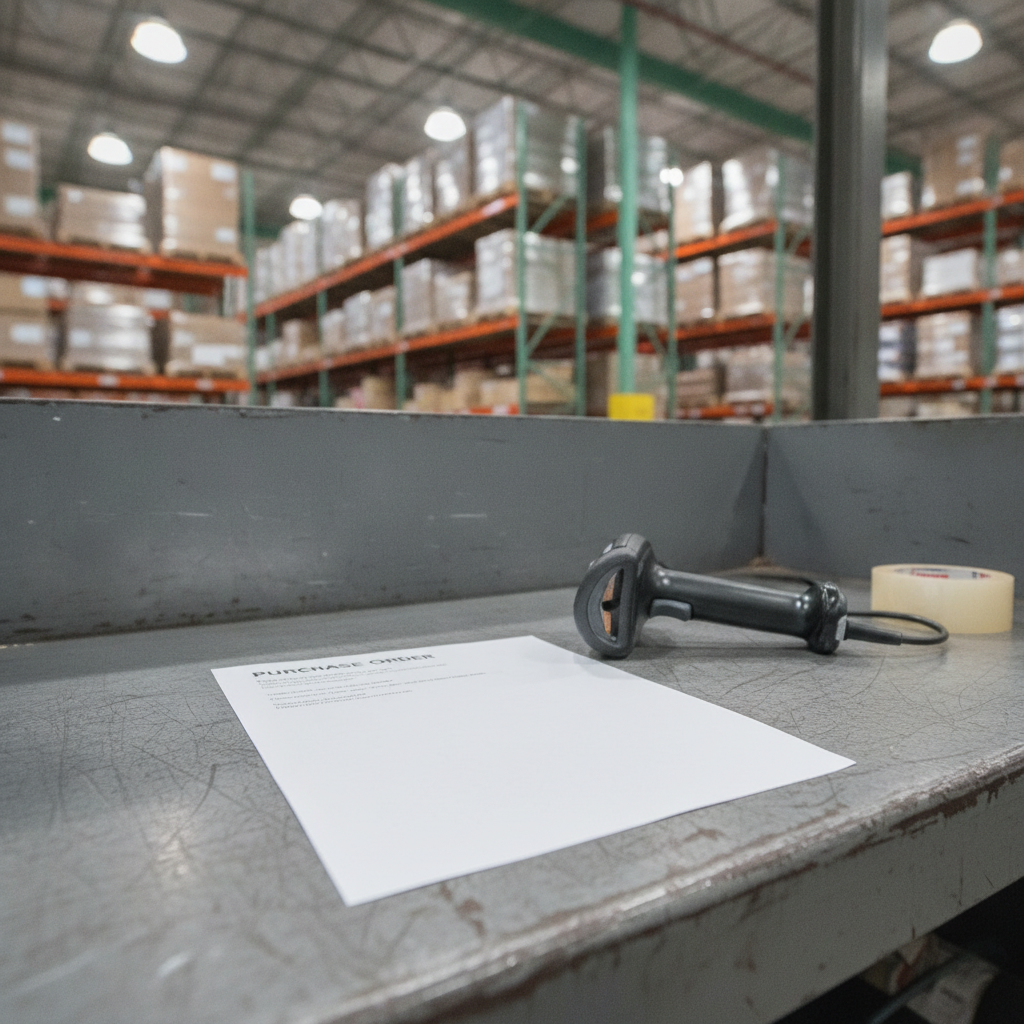
The document chain that follows every wholesale transaction
A wholesale distributor closes the sale on the phone or at the counter in minutes. The work that proves the margin held takes the rest of the week. The purchase order enters the system. A pick ticket routes the order through the warehouse by zone, aisle, and bin. A packing slip lists what goes on the pallet. A bill of lading transfers custody to the carrier. A proof of delivery confirms the customer received the shipment. A credit memo handles whatever went wrong: short shipments, damaged goods, pricing corrections. And a pricing matrix governs every line on every invoice. Each of these documents is created, checked, and reconciled by a different person at a different stage, and the mismatches between them are where margin disappears.
AI automation helps wholesale distributors close this gap by matching documents against each other in real time, flagging discrepancies before they reach the customer, and reducing the manual reconciliation that consumes back-office hours every week.
Purchase order to pick ticket: where downstream errors start
The purchase order arrives with line items, quantities, customer-specific pricing, and a requested delivery date. Someone translates that into a pick ticket: warehouse zone, aisle, bin location, lot number, quantity to pull. That translation is often manual or semi-manual, and a mismatch at this stage (wrong SKU, wrong quantity, wrong unit of measure) cascades through the rest of the chain.
A short shipment becomes a credit memo. A wrong item becomes a return. Both become customer service calls, and the person handling the dispute rarely has the original PO and the pick ticket side by side.
AI can compare the PO against the pick ticket at the point of creation, flagging line-item discrepancies before the order reaches the warehouse floor. The warehouse team still picks, packs, and ships. The automation catches the translation errors that human speed and volume make inevitable.
Packing slip to bill of lading: freight charges and shortage claims
The packing slip lists what is in the box or on the pallet. The bill of lading lists what the carrier is accepting: weight, freight class, piece count. When these do not match, the distributor pays incorrect freight charges, the receiver files shortage or damage claims, and the margin on a transaction that looked profitable at the point of sale erodes quietly.
Automation can cross-reference the packing slip against the BOL at the shipping dock, catching weight or piece-count mismatches before the carrier leaves. The shipping team still loads the truck. The system verifies that what the carrier signs for matches what was packed.
Credit memos: the reconciliation nobody wants to do
Returns, short shipments, damaged goods, and pricing disputes all generate credit memos. Each credit memo must reference the original invoice, the original PO, and the specific line items affected. In many distribution operations, the person processing the credit memo is not the person who handled the original sale. They are reconstructing the transaction from documents that may live in different systems or on different desks.
AI can pull the original PO, the invoice, and the delivery record together when a credit request comes in, pre-populating the credit memo and flagging any discrepancy between the claimed issue and the documented shipment. The credit team still reviews and approves. The automation eliminates the manual document chase.
Pricing matrices: the spreadsheet that controls margin
Wholesale distributors maintain different price lists for different customer tiers, contract customers, volume-break schedules, and promotional pricing. The sales rep quotes a price. The invoice must reflect that price. The pricing matrix must be current. When the matrix lives in a spreadsheet or a legacy system that does not sync to order entry, pricing errors create either margin loss from undercharging or customer disputes from overcharging.
Automation can validate every invoice line against the current pricing matrix before the invoice is sent, catching pricing errors that would otherwise surface as disputes or as unexplained margin compression at month-end. The sales team still negotiates pricing. The system enforces what was agreed.
Customer credit and inventory: two more reconciliation gaps
New wholesale customers apply for trade credit with references, D&B reports, and requested credit limits. Orders against that limit must be checked before shipping. When credit limits are tracked manually, the business ships product on credit it has already exceeded or holds orders that could have shipped. Both are costly.
Inventory cycle counts create a similar reconciliation problem. The warehouse counts physical inventory against the system. Discrepancies must be investigated, documented, and adjusted. The count sheet, the investigation notes, and the system adjustment are often in three different places. Automation can centralize the discrepancy record and route it to the right person with the supporting documents attached.
Where to start
Pick the one document pair that generates the most disputes, credits, or rework in your operation. For many distributors, that is the PO-to-pick-ticket handoff or the credit memo process. Map the current workflow, identify where the manual reconciliation happens, and evaluate whether automation can close the gap before errors reach the customer.
If you want help identifying which document chain is costing the most in your operation, Get Your Free AI Assessment and start with a conversation about what your back office actually does every day.
Frequently asked questions
What types of documents can AI reconcile for wholesale distributors?
AI can match purchase orders against pick tickets, packing slips against bills of lading, invoices against pricing matrices, and credit memos against original transaction records. Any document pair with structured data and a common reference number is a candidate.
Do I need to replace my ERP or warehouse management system?
No. Most automation layers sit between existing systems, reading data from your current tools and flagging discrepancies. The goal is to close gaps in your current workflow, not to replace what already works.
How long does it take to see results from document automation?
Most distributors see the first reduction in reconciliation errors within the first month of running a focused pilot on one document pair. Full workflow coverage depends on how many document chains you automate and how complex your pricing structures are.
Is this only for large distributors?
No. The document chain problem is structural in wholesale distribution regardless of size. A distributor processing 50 orders a day has the same PO-to-pick-ticket reconciliation challenge as one processing 500. The difference is volume, not complexity.